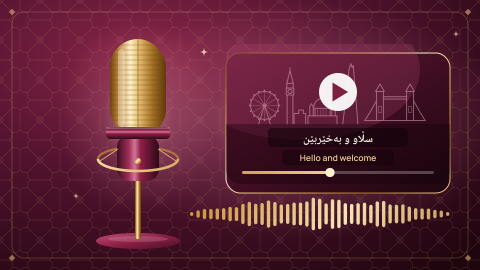
Recordings in Kurdish or Farsi, such as voice messages, phone calls or videos, are sometimes needed as evidence. The transcript and translation should then show exactly what was said, as far as the recording allows. Exact requirements depend on the court, tribunal or solicitor, so check with them first.
Verbatim, not tidied up
A verbatim transcript keeps hesitations, false starts, repetitions and unfinished sentences, because these details can matter when words are examined closely. I do not correct grammar or smooth over what people said.
What the document usually includes
- Timestamps, so any passage can be found quickly in the recording
- Speaker labels, such as Speaker 1 and Speaker 2, or names if you confirm them
- Clear markers such as [inaudible 00:12:34] or [overlapping speech], instead of guesses
- The English translation, often laid out side by side with the original so each line can be compared
Preparing the recording
- Keep the original recording unaltered and send me a copy, not your only version.
- Send the best-quality file you have. Recording quality strongly affects accuracy.
- Tell me which parts are needed, if not the whole recording.
- Ask the solicitor, court or tribunal whether they need a particular format or a certified translation.