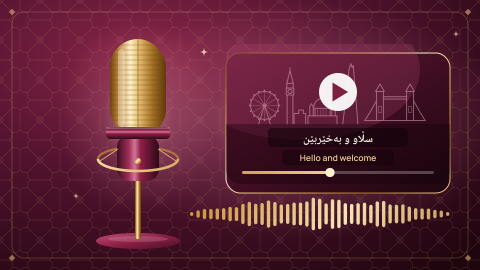
Subtitles in Kurdish (Sorani) or Farsi can bring a film, a training video or a campaign to a new audience. Both languages are written from right to left in Arabic-based scripts, which raises a few technical points worth checking before you publish.
Files and formats
Subtitles are usually delivered as SRT or WebVTT files, which are widely supported, or burned into the video itself. Tell me where the video will be shown and which format your editor or platform needs.
Easy to read
- Keep lines short, usually no more than two lines per subtitle.
- Leave each subtitle on screen long enough to read comfortably.
- Condense where needed: good subtitles carry the meaning, not every word.
- Break lines at natural points in the sentence.
Right-to-left pitfalls
- Punctuation such as full stops and question marks can appear on the wrong side in some players, especially next to English words or numbers.
- Use a font that supports Kurdish letters such as ڕ ڵ ێ ۆ ە. Otherwise they may show as empty boxes or in a mismatched font.
As a native speaker of Kurdish (Sorani) and Farsi, I can review the subtitles in the finished video, not just in the file.