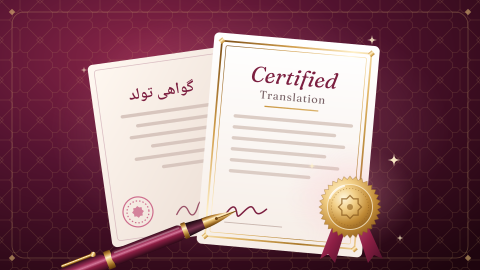
In many European countries, courts appoint ‘sworn’ translators whose stamp makes a translation official. The UK has no such system. As the Chartered Institute of Linguists puts it, the UK does not have a system of ‘sworn’ or ‘certified’ translators accredited by a particular body. Instead, a professional translator certifies their own work and is accountable for it.
What UK organisations ask for
For most purposes in the UK, including visa and immigration applications, what you need is a certified translation: a complete English translation with the translator’s confirmation that it is accurate, the date, their full name and signature, and their contact details. For applications for leave to remain or indefinite leave to remain, the Immigration Rules also ask for certification by a qualified translator and details of their credentials.
‘Home Office approved’ translators
You will see translators advertised as ‘Home Office approved’. The Home Office’s published guidance does not refer to any list of approved translators. It sets out what the translation itself must contain, and says the translation must be one that the Home Office can independently verify. What matters is a complete translation, the required details and a translator who can be contacted to confirm their work.
When an authority abroad asks for a sworn translation
If a document will be used in another country, the authority there may ask for a ‘sworn’ translation. In the UK, the usual equivalents are a translation sworn before a solicitor (an affidavit), a notarised translation, or a notarised translation with an apostille from the FCDO. Some countries only accept translations made by their own sworn translators, so ask the authority, or that country’s embassy, exactly what it accepts before you order.
How to check a translator
- Look for membership of a professional body, such as the Chartered Institute of Linguists (CIOL). Members’ qualifications and experience are assessed, and they agree to a code of professional conduct.
- Check the membership yourself: the CIOL’s free Find-a-Linguist service lets you look up a member by surname or membership number.
- Make sure the certificate gives the translator’s full name, signature, date and contact details, so the receiving organisation can verify it.
Common questions
Is a certified translation the same as a sworn translation?
Not exactly. In some countries, a sworn translator is appointed by the state. In the UK, a certified translation is signed by the translator, who takes responsibility for it, and for use in the UK it is what is normally asked for.
Does the Home Office need a notarised translation?
Its guidance and the Immigration Rules set out what a translation must include and do not mention notarisation. A notarised translation is usually needed only when an organisation specifically asks for one, often for use abroad.
Can I translate my own documents?
For the Home Office, the translation must be one it can verify independently, and for some applications it must be certified by a qualified translator. Many other organisations also refuse translations made by the applicant or a relative, so an independent professional is the safer choice.